The Historical Arc of Betting Progressions in Gaming
Logan Patterson · Jun 27, 2026
The Historical Arc of Betting Progressions in Gaming
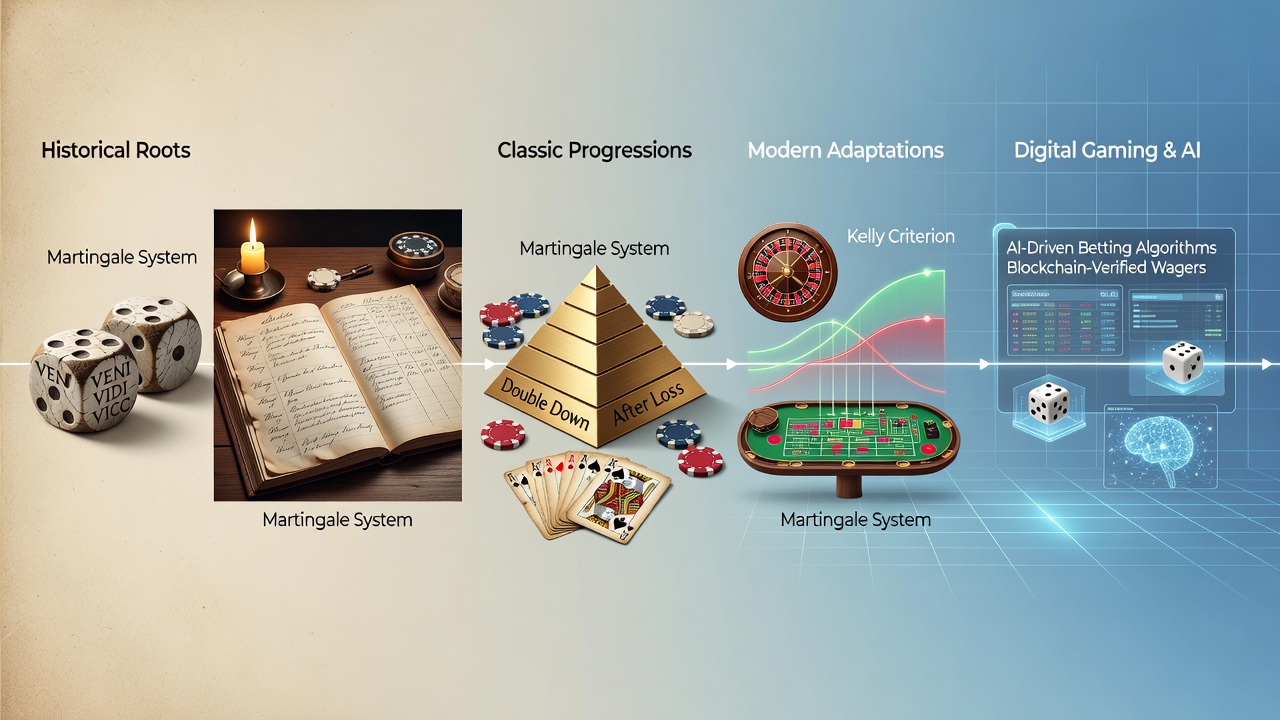
Betting progressions have followed a clear path from rudimentary wager adjustments in ancient societies to structured mathematical frameworks that shape decisions at modern tables and digital platforms. Observers note these systems emerged when players sought methods to manage outcomes across repeated bets, and data from historical archives shows early examples appearing in records from Roman and Chinese civilizations where bet sizes changed based on prior results.
Ancient Foundations and Early Records
Archaeological findings and surviving texts indicate that participants in dice games and chariot wagers often doubled stakes after losses as early as the first century, while researchers at institutions studying classical history have documented similar patterns in Tang dynasty China where merchants tracked sequences to recover prior amounts. These approaches remained informal until probability theory provided analytical tools in the 1600s, when correspondence between Blaise Pascal and Pierre de Fermat established foundational calculations that later informed systematic progressions.
Mathematical Formalization in the 1700s and 1800s
By the mid-eighteenth century, documented cases in French gaming houses describe the Martingale approach gaining traction among players who reset bets to the initial stake after each win, and records from that period show this method applied across even-money propositions such as red-and-black outcomes. The Fibonacci sequence entered betting contexts during the nineteenth century when mathematicians observed its additive structure offered an alternative recovery path, and evidence from period journals reveals adoption in both European and American establishments where tables accommodated sequential increases.
Additional systems such as the Labouchere cancellation method appeared in the same era, with practitioners crossing out numbers from predetermined lists after wins and losses, while data preserved in gaming ledgers demonstrates these techniques spread through printed manuals distributed across continents. Academic analyses from European universities confirm that these progressions relied on the assumption of finite bankrolls and table limits, factors that influenced their practical longevity.
Twentieth Century Refinements and Casino Integration
During the 1900s, progressions adapted to expanded casino environments in Nevada and Atlantic City, where operators introduced maximum bet ceilings that altered how players applied sequences. Industry reports from the American Gaming Association detail how mid-century establishments monitored progression users to maintain house edges, and figures from that time show increased scrutiny as electronic surveillance became standard. Researchers discovered that variants combining positive and negative progressions gained followers in blackjack and baccarat pits, yet outcomes remained governed by the same probability constraints identified centuries earlier.
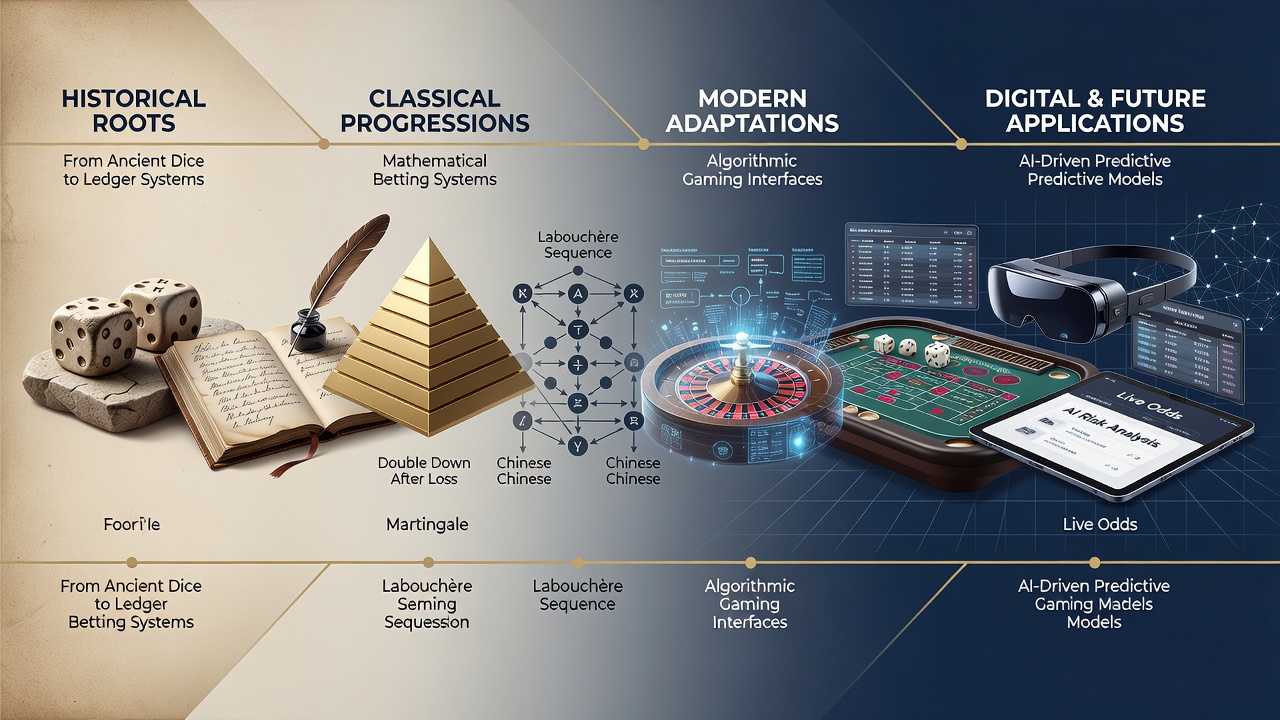
By the late twentieth century, computer simulations allowed testing across millions of trials, and studies published through university mathematics departments revealed consistent long-term results aligned with theoretical expectations. Those simulations also highlighted how variance affected short sessions, prompting players to adjust sequence lengths accordingly.
Contemporary Applications in Digital Environments
Online platforms have incorporated progression tools into software interfaces since the early 2000s, enabling automated bet adjustments that mirror historical methods while operating within regulatory frameworks established by bodies such as the Nevada Gaming Control Board. Data collected by the Canadian Gaming Association indicates rising participation in virtual tables where progression features integrate with random number generators, and reports from June 2026 note continued expansion of these tools across international markets. Algorithmic versions now appear in mobile applications, where users input starting amounts and the system executes predefined steps without manual intervention.
Academic papers from research institutions in Australia have examined player behavior in these environments, showing that progression usage persists despite unchanged mathematical probabilities. Integration with loyalty programs and real-time analytics further embeds these systems into daily operations at licensed operators worldwide.
Conclusion
The trajectory of betting progressions illustrates a consistent pattern: methods refined over centuries continue to find application wherever structured wagering occurs. Historical records, mathematical developments, and current industry data together demonstrate that these systems evolve alongside gaming technology while retaining core principles established in earlier periods. As platforms advance through 2026 and beyond, the same foundational sequences remain available to participants who choose structured approaches to stake management.