Ambient Noise and Its Effects on Attention During Shared Card and Dice Gaming Sessions
Paul Sullivan · May 30, 2026
Ambient Noise and Its Effects on Attention During Shared Card and Dice Gaming Sessions
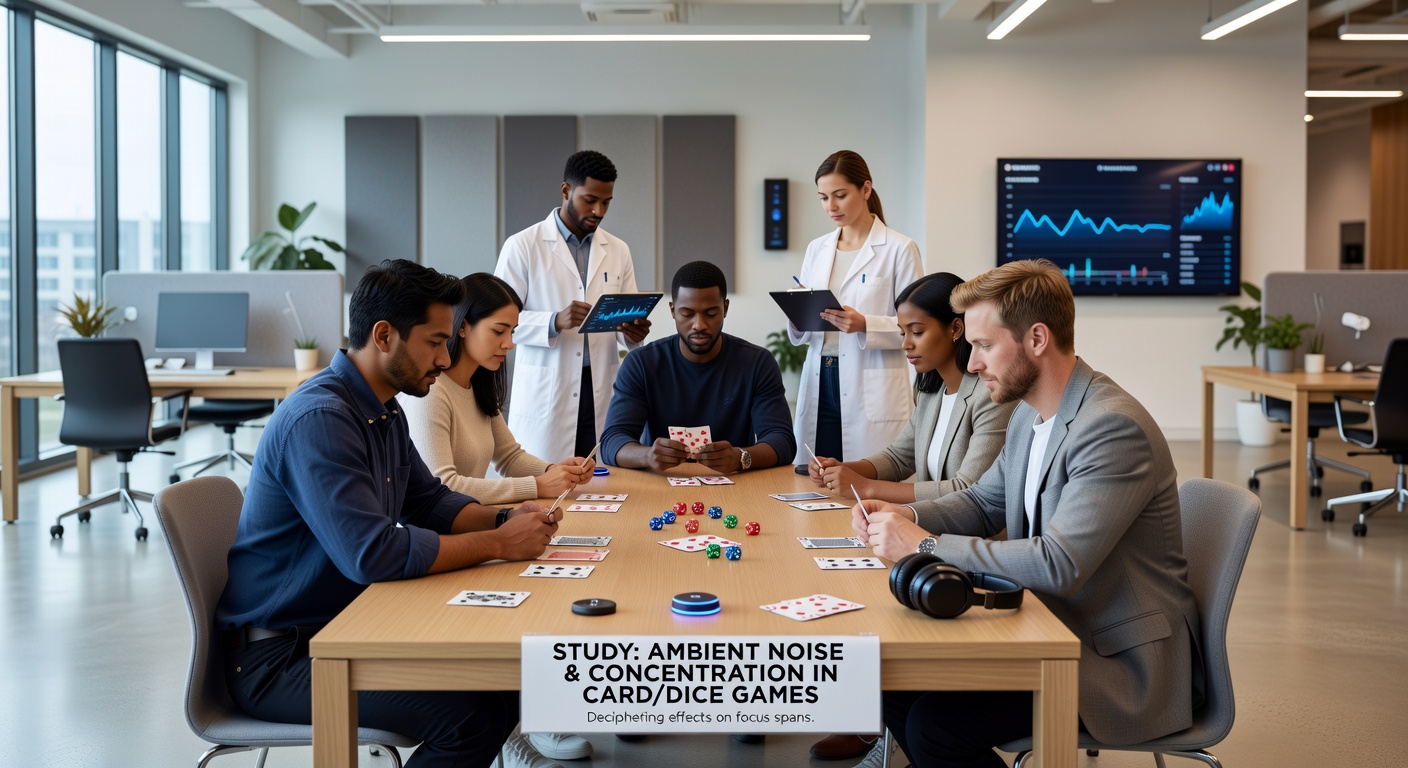
Communal card and dice encounters take place in environments filled with layered sounds from conversations, shuffling equipment, and surrounding activity, and researchers continue to examine how these elements shape attention spans across different player groups. Studies conducted in various gaming venues show that noise intensity and type interact with individual cognitive processes, producing measurable variations in focus duration during extended sessions.
Characteristics of Ambient Noise in Group Gaming Spaces
Ambient noise in these settings includes overlapping voices, mechanical sounds from dice rolling and card dealing, plus intermittent announcements or music, and data collected from multiple sites indicate that average decibel levels range between 65 and 85 dB during peak hours. Observers note that continuous background elements differ from sudden sharp sounds, because the former allows some adaptation while the latter interrupts ongoing cognitive tasks more directly. Those who have measured player responses report that conversation fragments from nearby tables often create the strongest distraction because they carry semantic content that competes with game-related decision making.
Research Findings on Concentration and Noise Exposure
Investigations into cognitive performance under varying sound conditions reveal that moderate ambient noise can sometimes support sustained attention by masking minor distractions, whereas higher or irregular levels tend to shorten concentration spans. A 2025 report from the Australian Institute of Health and Welfare documented performance declines in tasks requiring sequential planning when noise exceeded 80 dB for periods longer than 20 minutes. Similar patterns appear in gaming contexts, where players managing multiple betting options or tracking card sequences experience greater variability in response times as noise fluctuates. Researchers at McGill University released additional observations in May 2026 showing that participants exposed to recorded casino soundscapes completed dice probability assessments with reduced accuracy after 35 minutes compared with quieter control conditions.
Application to Card Game Environments
Card games such as blackjack and poker require continuous monitoring of visible information and opponent behavior, and ambient noise influences how long players maintain accurate tracking. Data from observational studies indicate that verbal interactions among players and spectators extend reaction intervals during critical decision points, particularly when the noise contains recognizable words or phrases. Those monitoring table dynamics have recorded shorter average focus periods in open gaming floors versus enclosed private rooms, where sound levels drop by approximately 15 dB. Patterns emerge consistently across different age groups, with younger participants demonstrating slightly faster adaptation to steady background noise while older participants show greater sensitivity to sudden volume spikes.
Application to Dice Game Environments
Dice encounters like craps involve rapid successive rolls and collective betting decisions, and surrounding noise affects both individual concentration and group coordination. Measurements taken at several North American venues demonstrate that collective cheering or exclamations following successful rolls can temporarily elevate overall sound pressure, leading to brief lapses in attention for subsequent wagers. Evidence from controlled simulations suggests that players positioned closer to high-traffic walkways encounter more fragmented focus because intermittent foot traffic noise interrupts the rhythmic sequence of rolls and payouts. Figures from the Canadian Centre on Substance Use and Addiction indicate that venues implementing partial acoustic barriers around dice tables recorded modest improvements in average session length before players reported mental fatigue.
Variables That Modify Noise Impact
Individual factors such as prior exposure to noisy environments, hearing sensitivity, and game familiarity interact with ambient conditions to determine concentration outcomes. Research compiled by the European Gaming and Betting Association highlights that experienced participants often develop selective attention strategies that filter repetitive sounds while remaining alert to game-relevant cues. Environmental variables also matter, because layout design, ceiling height, and material surfaces alter how sound propagates across a gaming area. Data collected across multiple jurisdictions show that facilities using absorptive panels near table clusters experience lower reported distraction levels than those relying solely on spatial separation.
Measurement Approaches and Ongoing Observations
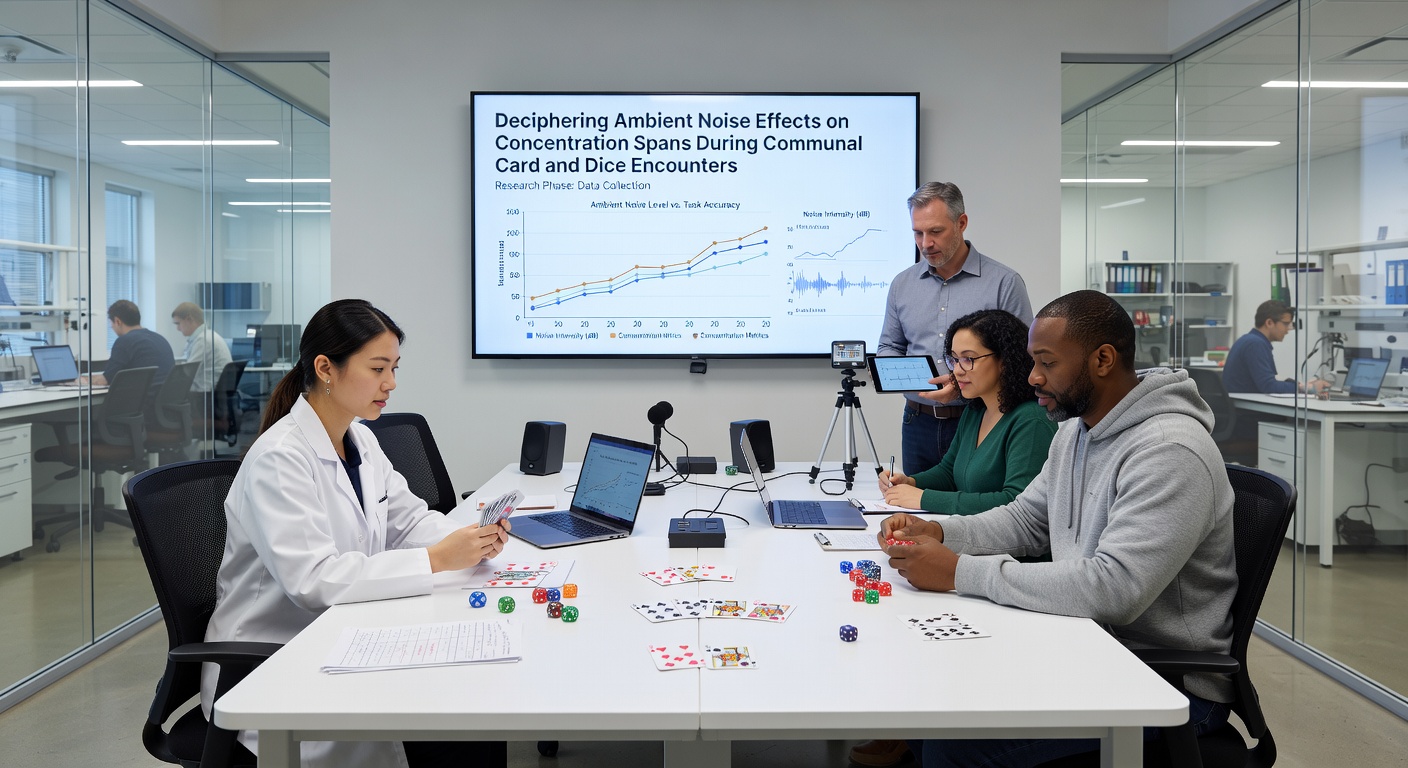
Researchers employ wearable attention-tracking devices alongside sound level meters to capture real-time correlations between noise fluctuations and player performance metrics. These methods allow continuous recording of eye movement patterns, decision latency, and error rates during live sessions. Reports emerging from collaborative projects between universities and gaming operators in 2026 continue to refine understanding of threshold levels at which concentration begins to decline measurably. Such work provides operators with objective benchmarks for evaluating acoustic modifications without relying on anecdotal feedback alone.
Conclusion
Evidence accumulated from multiple studies demonstrates that ambient noise exerts measurable effects on concentration spans during communal card and dice encounters, with outcomes depending on sound characteristics, individual differences, and environmental configurations. Continued data collection through standardized protocols supports clearer identification of conditions that preserve attention across varied gaming formats and participant groups.